By Adrián Pérez Solla
There are moments when an industry moves forward and, in doing so, has to say goodbye to technologies that played an important role in getting it there. For the heat pump industry, one of those moments is the gradual farewell to R410A.
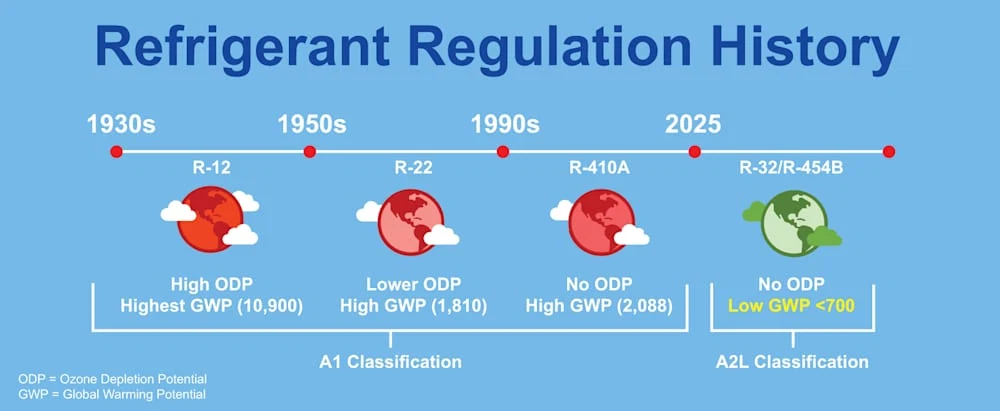
R410A has been one of the most widely used refrigerants in heat pumps for more than two decades. It became a familiar name for manufacturers, installers, engineers and end users, and it accompanied the industry through a period of extraordinary growth. As we know, it was not perfect, and its GWP of 2,088, means that it could not be part of the industry’s long-term decarbonisation journey. But looking at R410A only through its GWP would be unfair.
R410A, in the begining of the heat pump market
R410A emerged as one of the alternatives to R22 following the regulatory measures aimed at phasing out ozone-depleting substances. Now, several decades later, another regulatory transition is pushing the industry away from R410A and towards lower-GWP refrigerants.
When heat pumps started becoming a serious alternative to conventional heating technologies, the industry needed refrigerants that could provide reliable performance across a wide range of applications. R410A became one of those solutions.
It allowed manufacturers to develop increasingly efficient heat pumps, helped installers build experience with the technology and became part of a huge installed base across Europe and many other markets. In other words, R410A was not just a refrigerant. It was part of the industrialisation of the heat pump sector.
Many challenges lie ahead
As we all know, this transition poses a significant short-term challenge. After all, industry stakeholders, ranging from component and heat pump manufacturers to distributors and installers, were comfortable and secure using R410.
Alternatives had already emerged prior to this mandatory shift; R32, for instance, has played a major role for years, yet its use will also be restricted under this new legislation.
However, replacing R410A is not simply a matter of swapping the refrigerant inside the unit. As we are all aware, the introduction of R290 and R454C presents a series of challenges that the industry must overcome in a short timeframe. The use of low-GWP refrigerants brings issues regarding flammability, charge limits, technical room requirements, component shortages or limitations, and new standards.
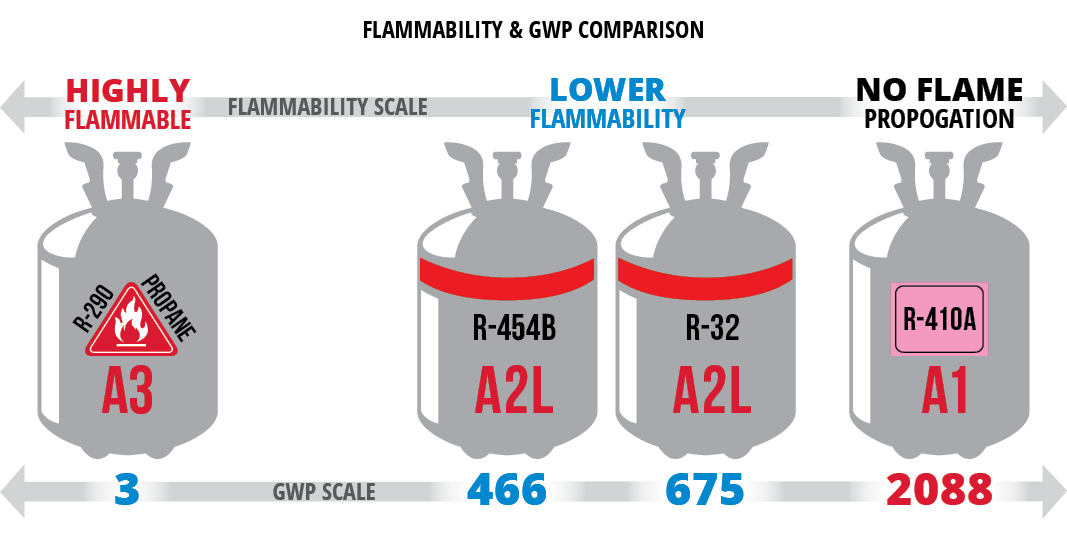
Therefore, it is not just a matter of changing a refrigerant; the industry’s way of thinking and acting is being transformed. This represents the true value of the role R410A has played over the years, a role that is now coming to an end.
Time to say goodbye
I understand the regulations and agree that we must always seek the best environmental alternative,that is why we are in this industry! The challenges we face today are different from those we faced 20 years ago.
In any case, you have had a successful journey and played a key role in getting this industry to where it is today. So perhaps the right way to say goodbye is: thank you, R410, and welcome, next generation!