By Adrián Pérez Solla
Qvantum has been one of the names generating the most conversation in the heat pump industry, particularly since 2023.
That year, the company raised €42 million to accelerate the launch of its new generation of heat pumps and acquired Electrolux’s former manufacturing facility in Hungary. For those of us working in the heat pump industry, and particularly in the water-to-water segment, it felt like the long-awaited revolution had finally been announced. A new major European player was coming.
Qvantum: The 30-year-old startup
There is something slightly unusual about Qvantum’s story, the company is not, in fact, a startup. Its origins go back to 1993 in Sweden, where it spent decades developing heat pump technology, initially focusing on customised solutions and more specialised applications. Over the years, Qvantum built up considerable technical experience, but remained a relatively small and specialised player compared with the large European heat pump manufacturers.
It was in 2021 that the initial changes took place, Fredrik Rosenqvist and a group of energy industry executives joined the company with a vision that differed from the previous one. The company began a transformation aimed at turning that accumulated experience into something much bigger, a technology company focused not only on heat pumps, but on the electrification and decarbonisation of buildings and energy networks.
The 2023 revolution
For someone like me, who has followed the water-to-water heat pump market for years, Qvantum’s emergence was a major event. The company was investing heavily in people, technology and marketing, while putting a strong emphasis on heat networks, low-temperature systems and projects where water-to-water heat pumps can play a central role.
Some people may see Ecoforest and Qvantum as direct competitors, and, of course, there will be projects where we compete directly. But beyond individual projects, I believe there is a bigger picture. Companies working to decarbonise heating and cooling are, ultimately, working towards the same goal.
But after the initial announcement, the wait was longer than many expected Product launches took time. The ambitious plans announced in 2023 were not immediately reflected in the number of products appearing in the market, and this inevitably generated some external scepticism.
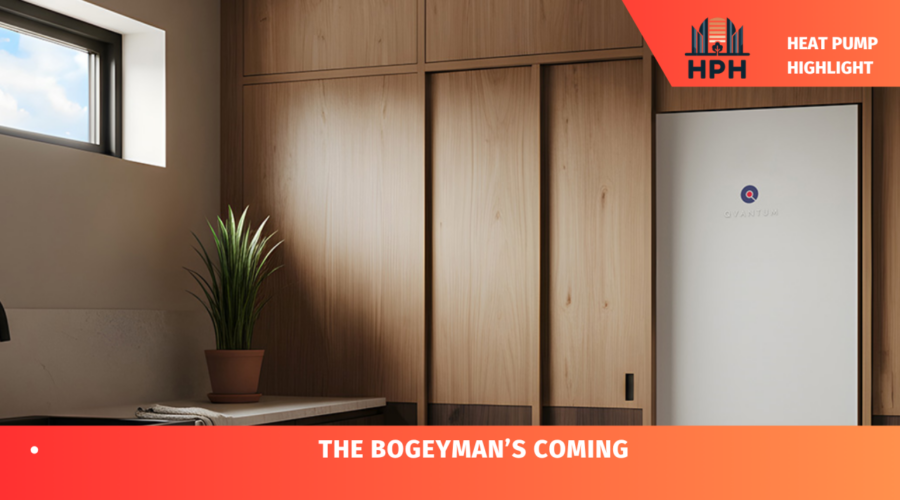
The bogeyman’s coming
This year, however, something has started to change. The first signs of Qvantum’s expansion are becoming increasingly visible, not only through products, but through partnerships and projects. In recent weeks, the company has announced agreements in several European markets. One particularly interesting example is the partnership with Comfortgruppen in Sweden.
And perhaps the clearest evidence is appearing where it matters most. in the field. Social media is increasingly filled with examples of Qvantum installations. Exhaust-air heat pumps have been particularly visible, but water-to-water systems are now beginning to appear as well.
Another example of how this sector is constantly evolving
As I’ve said before, the emergence of players like Qvantum is fantastic news for the industry.
Companies bringing innovative proposals and looking for new ways to decarbonise cities through future-oriented solutions can only contribute to the development of the heat pump market. It is still too early to tell whether the impact will live up to the promise now that the products are becoming a reality. But the wait is over, and the next chapter of Qvantum’s story has begun. We will be following it closely.